The “his and her” gender binary is seen everywhere in today’s society, but also with products of food. For example, Yogi Tea has created a men’s and women’s tea (pictured below-from the Yogi Tea website).
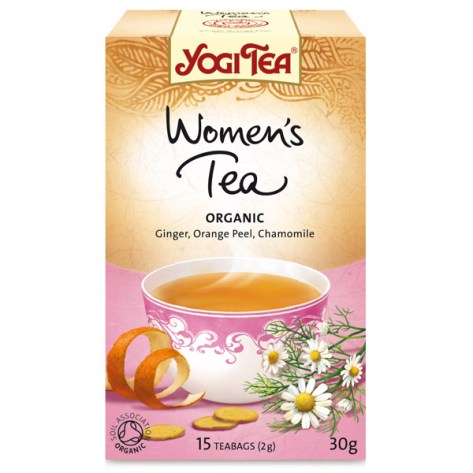
Starting with the packaging, the women’s tea has pink (which is generally associated with the female gender), along with flowers and a wavy and curly pattern on the tea cup. The flowers are also a tribute to the perception of femininity in society being delicate, and women generally appreciating the “pretty” parts of nature like flowers. Furthermore, the curly pattern on the tea cup replicates a floral pattern with leaves, which reinforces the notion of femininity in society. The description on the website states the tea is “supports the feminine side of creativity” and “the essence of the tea is: ‘Deep compassion’.” The site labels the tea specifically towards women by implying only the feminine spirit of creativity will benefit to whoever drinks the product. Furthermore, compassion, that is mentioned, is often a characteristic associated with mothers (women) to children and others. Yogi Tea has specifically gendered the tea product and developed marketing techniques to specifically target the expected delicate and care taking nature of women in society.

On the other hand, the men’s tea has packaging that includes brown tones with a chili pepper and a raw ginger root. It implies the ruggedness of masculinity of America’s society on men. Moreover, the description of the tea writes, “the masculine side…suffers of stress, exhaustion, and excessive eating which can negatively impact our body regarding power and strength” and “the essence of this tea is: ‘Strength’.” The idea that company portrays of masculinity equating “suffers of stress, exhaustion…” shows the social construction of masculinity and strength, which is also illustrated in the “essence of the tea.” The “suffers of stress of exhaustion” imply that men are working so hard that they need a relief to restore their power to work again, which represents how men’s standards are set in society as the breadwinners, while the women are the caretakers. The two teas represent the gendered notion of food and drink within society. They are only one example of various products today that exploit these gendered standards to sell certain products.
Works Cited
 The Binary Nature of Food and Drink: Exploring Food and Drink Through Gender